ລິ້ງ ສຳຫລັບເຂົ້າຫາ

ວັນພະຫັດ, 18 ມິຖຸນາ 2026

ຍານສຳຫຼວດ Philae ​ຂອງອົງກາ​ນ ອະວະ​ກາດ​ຢູ​ໂຣບ ຈະ "ພິກຜັນສະຖານະການ"

ຍານສຳຫລວດ Philae ແມ່ນລົງຈອດຢູ່ເທິງດາວຫາງ ທີ່ມີຊື່ວ່າ 67P/Churyumov-Gerasimenko ຢ່າງປອດໄພ ດັ່ງທີ່ມີຮູບພາບຢັ້ງຢືນໄດ້ນັ້ນ. ຕີນນຶ່ງໃນຈຳນວນສາມຕີນ ຂອງຍານສຳຫລວດ Philae ແມ່ນສາມາດເຫັນໄດ້ຢູ່ໃນ 2 ຮູບພາບທີ່ຕິດຕໍ່ເຂົ້າກັນ, ວັນທີ 13 ພະຈິກ 2014. (ພາບຈາກ ESA)

ຫລາຍ​ຮ້ອຍພັນລ້ານ​ກິ​ໂລ​ແມັດ ຫ່າງ​ອອກ​ໄປ​ຈາກ​ໂລກ​ນັ້ນ
ຍານ​ອາ​ວະ​ກາດ ​ຂອງ​ຢູ​ໂຣບ ​ໃນ​ວັນ​ພຸດ​ຜ່ານ​ມາ​ນີ້ ​ໂດຍໄດ້
​ລົງຈອດຢ່າງເປັນປະຫວັດການດ້ວຍຄວາມສຳເລັດຜົນ​ເທິງ
​ພື້ນຜິວ​ທີ່ອັນ​ເປັນນ້ຳກ້ອນ ແລະເປັນຂີ້ຝຸ່ນຂອງ​ດາວຫາງ ​ທີ່
​ກຳລັງໂຄຈອນ ໄປດ້ວຍຄວາມ​ໄວນັ້ນ ​ແມ່ນ​ເປັນ​ການ​ອອກ​
ແບບ​ຄັ້ງທຳ​ອິດ​ ທີ່​ເກັ່ງ​ກ້າ ​ເພື່ອ​ທີ່​ຈະຫາຄຳຕອບ ຕໍ່ຄຳ​ຖາມ
ອັນ​ໃຫຍ່ຫລວງ ກ່ຽວ​ກັບ​ລະບົບຈັກກະວານ.

​ເຖິງ​ຢ່າງ​ໃດ​ກໍຕາມ ມາ​ຮອດ​ວັນ​ເສົາ​ວານ​ນີ້ ອົງກາ​ນອາ​ວະ​ກາດ​
ຢູ​ໂຣບ ຫຼື ESA ກ່າວ​ວ່າ ໝໍ້ໄຟຂອງ​ຍານສຳຫຼວດ Philae ​ແມ່ນ​
ໄດ້ໝົດ​ພະລັງງານ ​ແຕ່​ກ່ອນຈະ​ໝົດ​ລົງນັ້ນ ກໍ​ໄດ້​ນຳ​ສົ່ງ​ຂໍ້​ມູນຫຼາຍໆຢ່າງ ກ່ຽວ​ກັບ ບໍລິເວນ
​ອ້ອມ​ແອ້​ມ ຂອງຍານ​ດັ່ງກ່າວ​ນັ້ນ ຄືນມາ​ສູ່​ໂລກ.

ອົງການ ESA ກ່າວ​ວ່າ ຍານ Philae ​ບິນຂຶ້ນ​ປະມານ 4 ຊັງ​ຕີ​ແມັດ ໃນ​ວັນ​ສຸກ​ຜ່ານ​ມາ
​ແລະ ​ໄດ້​ເຄື່ອນ​ຍ້າຍ 35 ອົງສາ ໃນ​ຄວາມ​ພະຍາຍາມ ທີ່​ຈະຍ້າຍ​ມັນ ​ອອກ​ຈາກ​ຮົ່ມ ເພື່ອ
​ໃຫ້​ແຜ່ນຮັບພະ​ລັງ​ແສງ​ແດດ ​ສາມາດ​ສາກໝໍ້ໄຟ ທີ່ໝົດໄປແລ້ວນັ້ນ​ຄືນໃໝ່. ຍັງບໍ່ທັນ
ເປັນທີ່ຈະແຈ້ງ ໃນ​ທັນ​ໃດເທື່ອວ່າ ການ​ເຄື່ອນ​ຍ້າຍຍາຍ​ທີ່​ຫຍຸ້ງ​ຍາກ​ດັ່ງກ່າວ​ ​ເປັນ​ຜົນ
ສຳ​ເລັດຫຼືບໍ່ ​ໃນ​ການກາງແຜ່ນ​ຮັບ​ພະລັງ​ແສງ​ແດດ ອອກ​ຈາກ​ເງົາ​ນັ້ນ.

​ເຖິງ​ແມ່ນວ່າ​ ການຍ້າຍດັ່ງກ່າວ ປະສົບກັບຄວາມສຳເລັດ ມັນກໍອາດຈະ ໃຊ້ເວລາຫຼາຍໆ
ອາທິດ ຫລືຫລາຍໆເດືອນ ກ່ອນທີ່ຍານ Philae ຈະສາມາດສົ່ງສັນຍານໃໝ່ ກັບຄືນມາ
ຍັງໂລກໄດ້. ການສືບຕໍ່ກວດກາເບິ່ງ ສັນຍານ ຍັງຈະດຳເນີນຕໍ່ໄປ. ສັນຍານເທື່ອສຸດທ້າຍ ແມ່ນໄດ້ຮັບໃນຕອນເຊົ້າ ວັນເສົາວານນີ້.

ຍານສຳຫຼວດ Philae ລົງຈອດ ເທິງດາວຫາງ

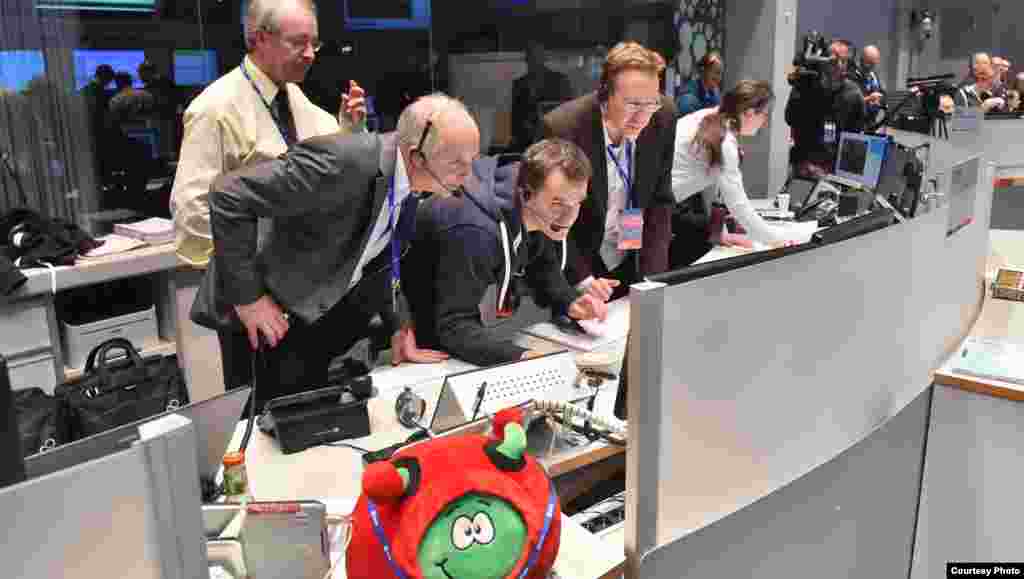
Smiles in the Main Control Room at ESA's Operations Center, as separation of the Philae lander from ESA Rosetta orbiter is confirmed and the Philae lander on its way to becoming the first spacecraft to touch down on a comet, Nov. 12, 2014. (Courtesy: Euro
1/7 Smiles in the Main Control Room at ESA's Operations Center, as separation of the Philae lander from ESA Rosetta orbiter is confirmed and the Philae lander on its way to becoming the first spacecraft to touch down on a comet, Nov. 12, 2014. (Courtesy: Euro
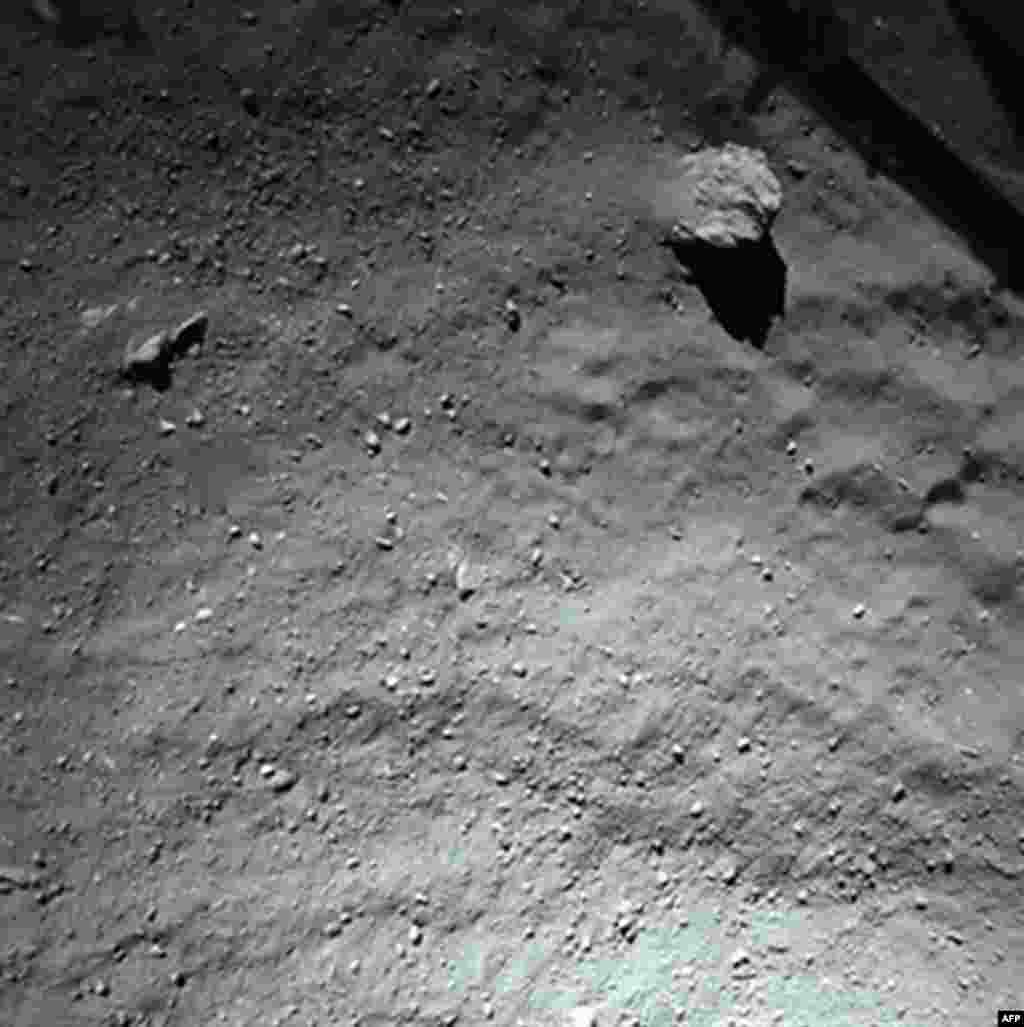
A handout photo released on November 13, 2014 by the European Space Agency, and taken by the Rosetta Lander Imaging System instrument, shows the surface of comet 67P/Churyumov-Gerasimenko during Philae's descent, from a distance of approximately 40 meters above the surface. (Courtesy: European Space Agency)
2/7 A handout photo released on November 13, 2014 by the European Space Agency, and taken by the Rosetta Lander Imaging System instrument, shows the surface of comet 67P/Churyumov-Gerasimenko during Philae's descent, from a distance of approximately 40 meters above the surface. (Courtesy: European Space Agency)
Receipt of signal from comet surface just after Philae landed, Nov. 12, 2014. (Courtesy: European Space Agency)
3/7 Receipt of signal from comet surface just after Philae landed, Nov. 12, 2014. (Courtesy: European Space Agency)
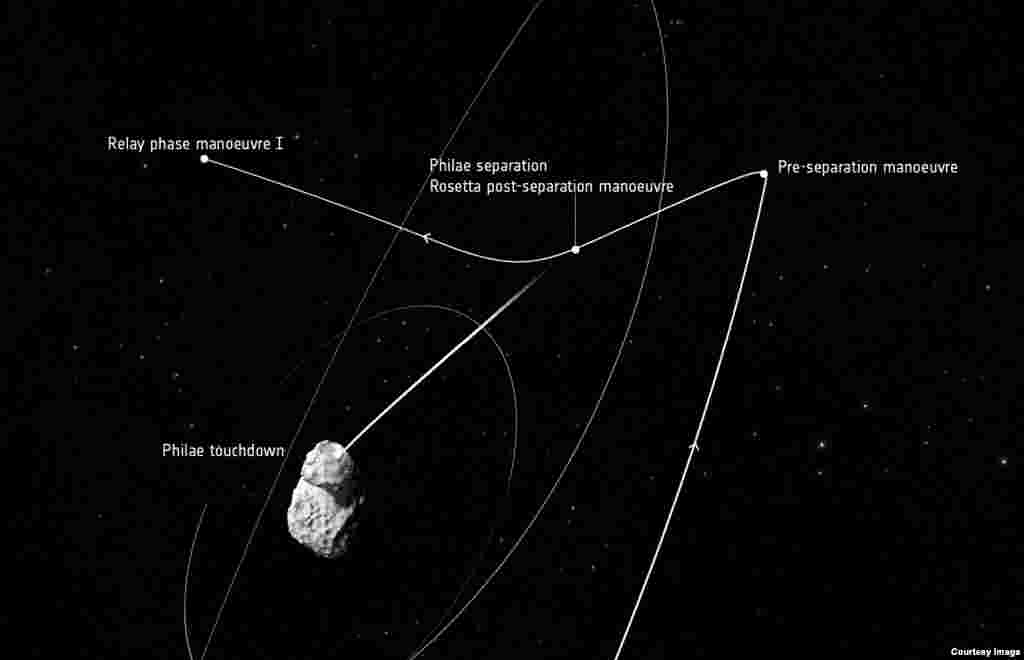
Trajectory of Rosetta’s orbit, focusing on the maneuvers of Nov. 12. (Courtesy: European Space Agency)
4/7 Trajectory of Rosetta’s orbit, focusing on the maneuvers of Nov. 12. (Courtesy: European Space Agency)
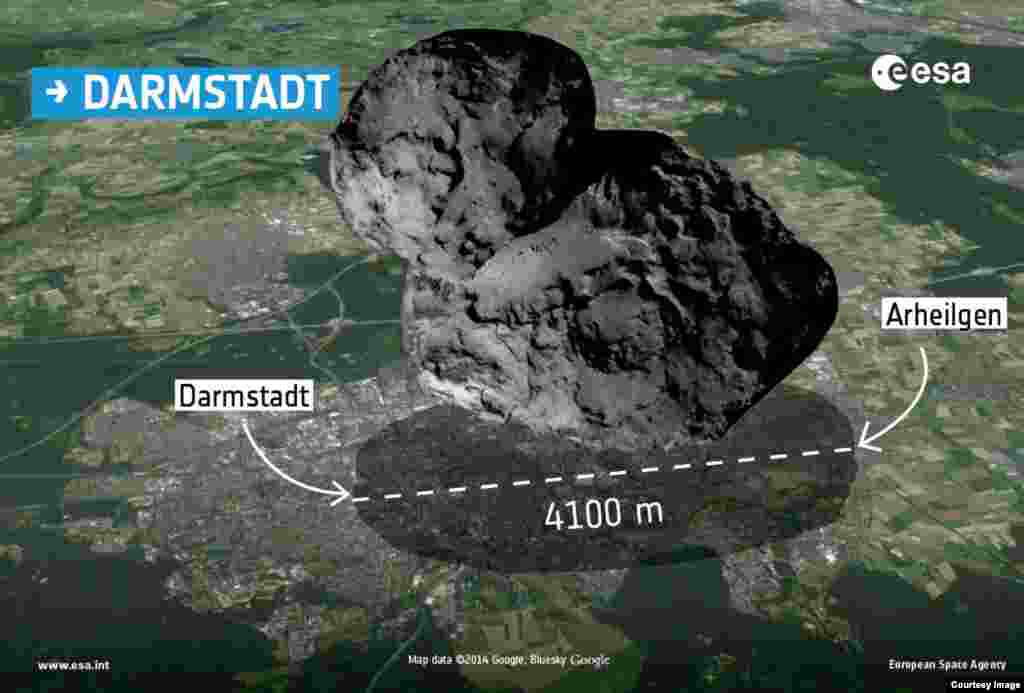
Comparing the size of Comet 67P/Churyumov–Gerasimenko with the city of Darmstadt, Germany, home to the European Space Operations Center. (Courtesy: European Space Agency, Google maps)
5/7 Comparing the size of Comet 67P/Churyumov–Gerasimenko with the city of Darmstadt, Germany, home to the European Space Operations Center. (Courtesy: European Space Agency, Google maps)
Artist impression showing Philae separating from Rosetta and descending to the surface of comet 67P/Churyumov-Gerasimenko. (Courtesy: European Space Agency)
6/7 Artist impression showing Philae separating from Rosetta and descending to the surface of comet 67P/Churyumov-Gerasimenko. (Courtesy: European Space Agency)
This image from Rosetta’s OSIRIS narrow-angle camera is marked to show the location of the first touchdown point of the Philae lander. It is thought that Philae bounced twice before settling on the surface of Comet 67P/Churyumov-Gerasimenko, Nov. 12, 2014. (Courtesy: European Space Agency)

7/7 This image from Rosetta’s OSIRIS narrow-angle camera is marked to show the location of the first touchdown point of the Philae lander. It is thought that Philae bounced twice before settling on the surface of Comet 67P/Churyumov-Gerasimenko, Nov. 12, 2014. (Courtesy: European Space Agency)

Previous slide
Next slide


XS
SM
MD
LG