ລິ້ງ ສຳຫລັບເຂົ້າຫາ

ວັນພະຫັດ, 10 ກັນຍາ 2026

ຍານ Cassini ຈະບິນດິ່ງລົງ​​ໃສ່ ດາວພະເສົາ ເພື່ອຮັກສາໄວ້ ສິ່ງທີ່ມີຊີວິດ

Cassini Spacecraft On Course for Final Death Dive into Saturn
please wait

No media source currently available

0:00 0:02:25 0:00

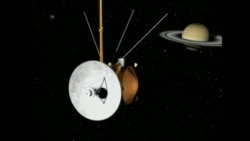
ຫຼັງຈາກ ທີ່​ໄດ້​ປະຕິບັດ​ງານເປັນ​ເວລາ 20 ປີ ຮວມທັງ​ການ​ຕໍ່​ອາຍຸ 2 ຄັ້ງນັ້ນ ຍານອະ
ວະກາດ Cassini ກຳລັງກະກຽມ ທີ່ຈະບິນດິ່ງລົງ​ ເປັນຄັ້ງສຸດທ້າຍ ເຂົ້າ​ໃສ່ ດາວພະ
ເສົາຫຼື Saturn ໃນວັນສຸກ ມື້ອື່ນນີ້.

ພວກນັກວິທະຍາສາດ ແລະ ວິສະວະກອນ ຢູ່ທີ່ ສູນກາງ​ຄວບ​ຄຸມ Jet Propulsion
Laboratory ຂອງອົງການອະວະກາດ ສະຫະລັດ ຫຼື NASA ໄດ້ກ່າວວ່າ ການຕັດສິນ
ໃຈຂອງພວກເຂົາເຈົ້າ ເພື່ອຍຸຕິຊີວິດ ຂອງຍານອະວະກາດ ແບບນີ້ ກໍເປັນຍ້ອນ ສິ່ງທີ່
ພວກເຂົາເຈົ້າໄດ້ພົບເຫັນ ໃນລະຫວ່າງປະຕິບັດງານດັ່ງກ່າວ ທີ່​ອາດຈະ​ເປັນສ່ວນ​ປະ
ກອບ​ ຂອງສິ່ງທີ່ມີຊີວິດ ຢູ່​ໃນເດືອນບາງ​ໜ່ວຍ ຂອງດາວພະເສົາ.

Cassinia  Saturn Mission
please wait

No media source currently available

0:00 0:01:21 0:00

ທ່ານ Morgan Cable ຮອງ​ຫົວໜ້າໂຄງການວິທະຍາສາດ ຂອງລະບົບວິສະວະກຳ
ຍານ Cassini ໄດ້ກ່າວວ່າ “ໃນເວລາ ຂອງການອອກແບບຍານນັ້ນ ພວກເຮົາບໍ່ຮູ້
ຫຍັງເລີຍວ່າ ມີມະຫາສະໝຸດ ຢູ່ໄກ​ອອກ​ໄປ ຂອງລະບົບສຸລິ ຍະຈັກກະວານ.”

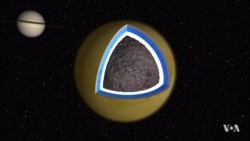
ການຄົ້ນພົບ ມະຫາສະໝຸດ ຢູ່​ໃນເດືອນບາງ​ໜ່ວຍ ຂອງດາວພະເສົາ ອາດໝາຍ
ຄວາມວ່າ ມີສິ່ງທີ່ມີຊີວິດ. ການຄົ້ນພົບທີ່ບໍ່ໄດ້ຄາດຄິດອັນນຶ່ງ ​ແມ່ນມີຂຶ້ນ ​ໃນ​ເຂດ
ຂົ້ວໃຕ້ຂອງເດືອນ Enceladus ເຊິ່ງເປັນດວງເດືອນນຶ່ງ ທີ່ຕິດ ຢູ່ໃນວົງ​ແຫວນ ຂອງ
ດາວພະເສົາ.

ທ່ານນາງ Molly Bittner ນັກວິສະວະກອນກ່ຽວ​ກັບ​ລະບົບປະຕິບັດງານ ຂອງຍານ
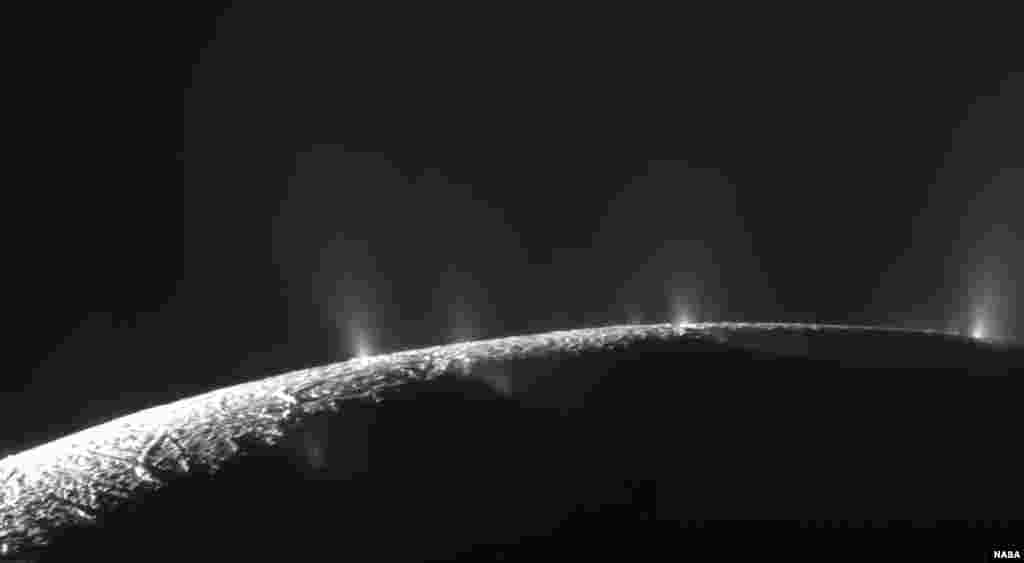
Cassini ໄດ້ກ່າວວ່າ “ມີມະຫາ​ສະໝຸດນ້ຳທີ່​ເປັນຂອງແ​ຫລວຢູ່ໃຕ້ພື້ນຜິວ ແລະ
ມັນໄດ້ສົ່ງສາຍນ້ຳພຸຮ້ອນ ຂຶ້ນມາ ແລະຮອຍແຕກເຫຼົ່ານີ້ເຮັດໃຫ້ນ້ຳພຸຮ້ອນພຸ່ງ​
ອອກມາ.”

ພາບສະໄລດ໌: ພາບທີ່ໜ້າມະຫັດສະຈັນ ຂອງ ວົງແຫວນ ແລະ ດວງເດືອນ ຂອງດາວ
ພະເສົາ ຈາກຍານ Cassini

Cassini's Amazing Photos of Saturn, Rings & Moons

This Jan. 28, 2016 image made available by NASA shows Saturn's rings, including the darker series of bands called the Cassini Division between the bright B ring, left, and dimmer A ring, right.
1/15 This Jan. 28, 2016 image made available by NASA shows Saturn's rings, including the darker series of bands called the Cassini Division between the bright B ring, left, and dimmer A ring, right.
This Aug. 12, 2009 composite image made available by NASA shows Saturn in equinox seen by the approaching Cassini spacecraft. Saturn's equinox occurs only once in about 15 Earth years.
2/15 This Aug. 12, 2009 composite image made available by NASA shows Saturn in equinox seen by the approaching Cassini spacecraft. Saturn's equinox occurs only once in about 15 Earth years.
This Dec. 3, 2015 image made available by NASA shows three of Saturn's moons - Tethys, above, Enceladus, second left, and Mimas, seen from the Cassini spacecraft.
3/15 This Dec. 3, 2015 image made available by NASA shows three of Saturn's moons - Tethys, above, Enceladus, second left, and Mimas, seen from the Cassini spacecraft.
This 2007 image made available by NASA shows a hydrocarbon sea named Ligeia Mare on Saturn's moon Titan, as seen by the Cassini spacecraft.
4/15 This 2007 image made available by NASA shows a hydrocarbon sea named Ligeia Mare on Saturn's moon Titan, as seen by the Cassini spacecraft.
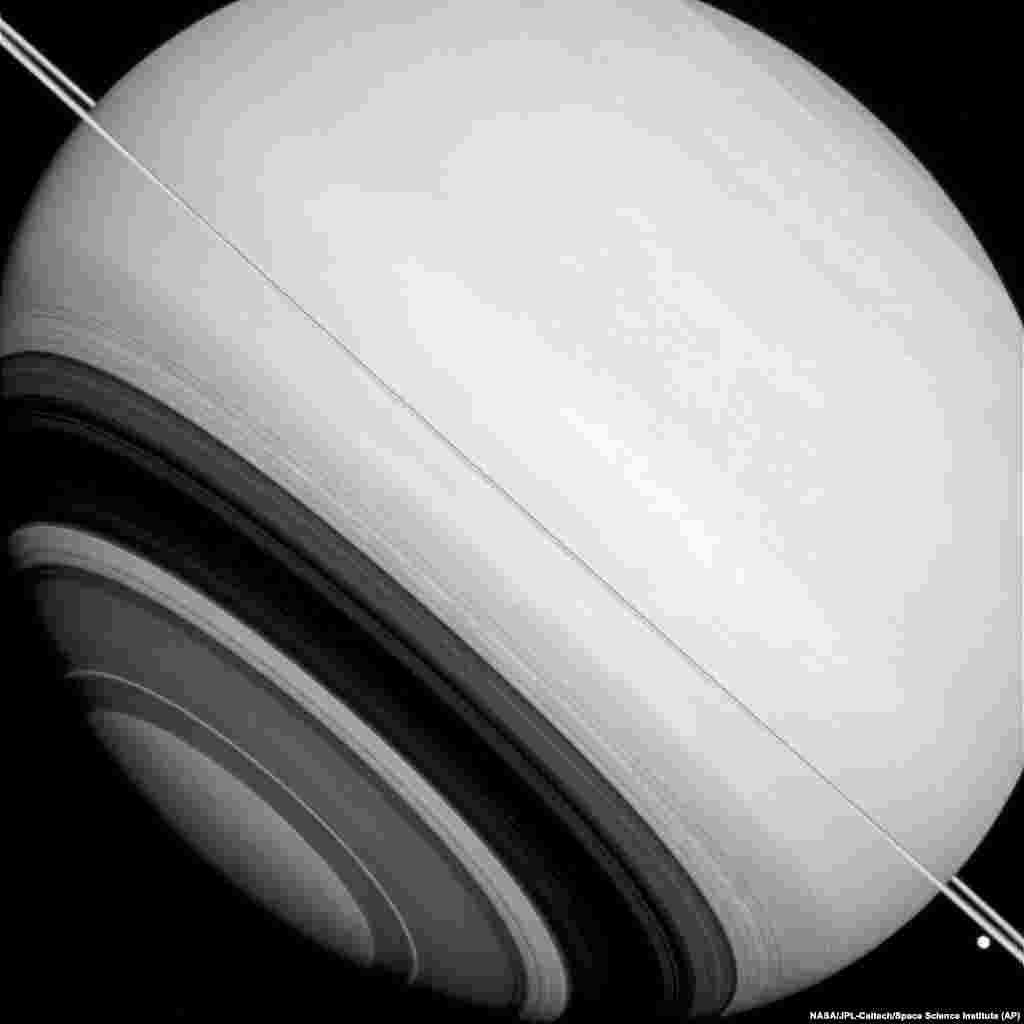
This Aug. 14, 2014 image made available by NASA shows shadows of Saturn's rings projected on the southern hemisphere of the gas giant.
5/15 This Aug. 14, 2014 image made available by NASA shows shadows of Saturn's rings projected on the southern hemisphere of the gas giant.
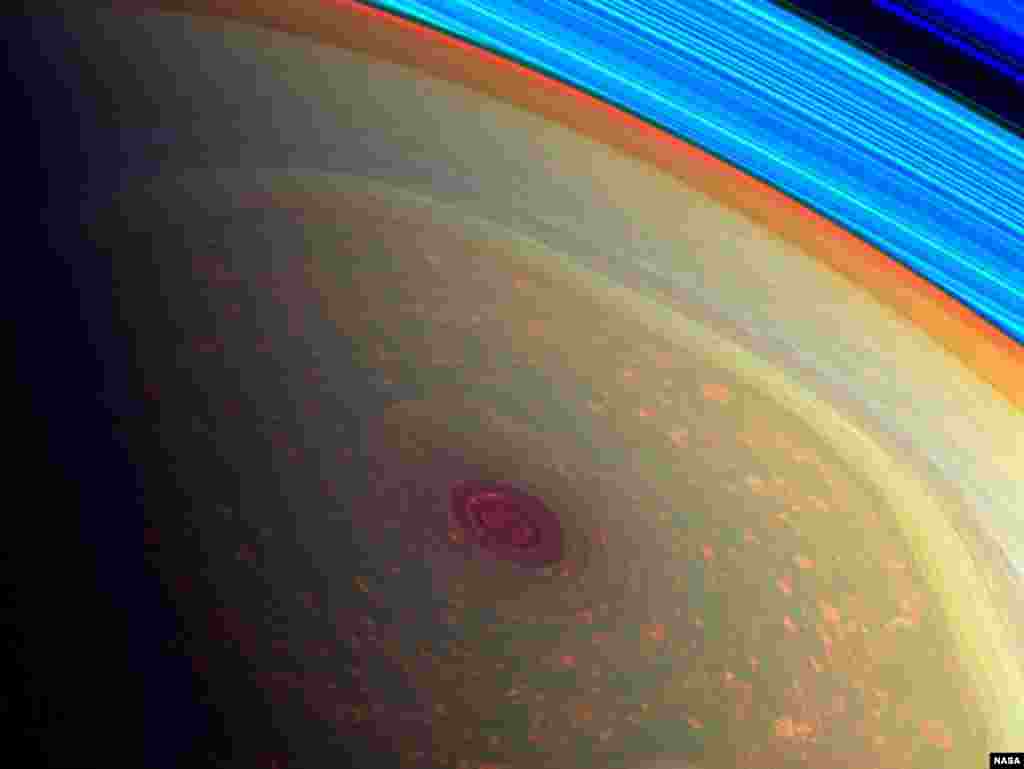
The Cassini spacecraft has captured the first detailed images of a giant hurricane on Saturn.
6/15 The Cassini spacecraft has captured the first detailed images of a giant hurricane on Saturn.
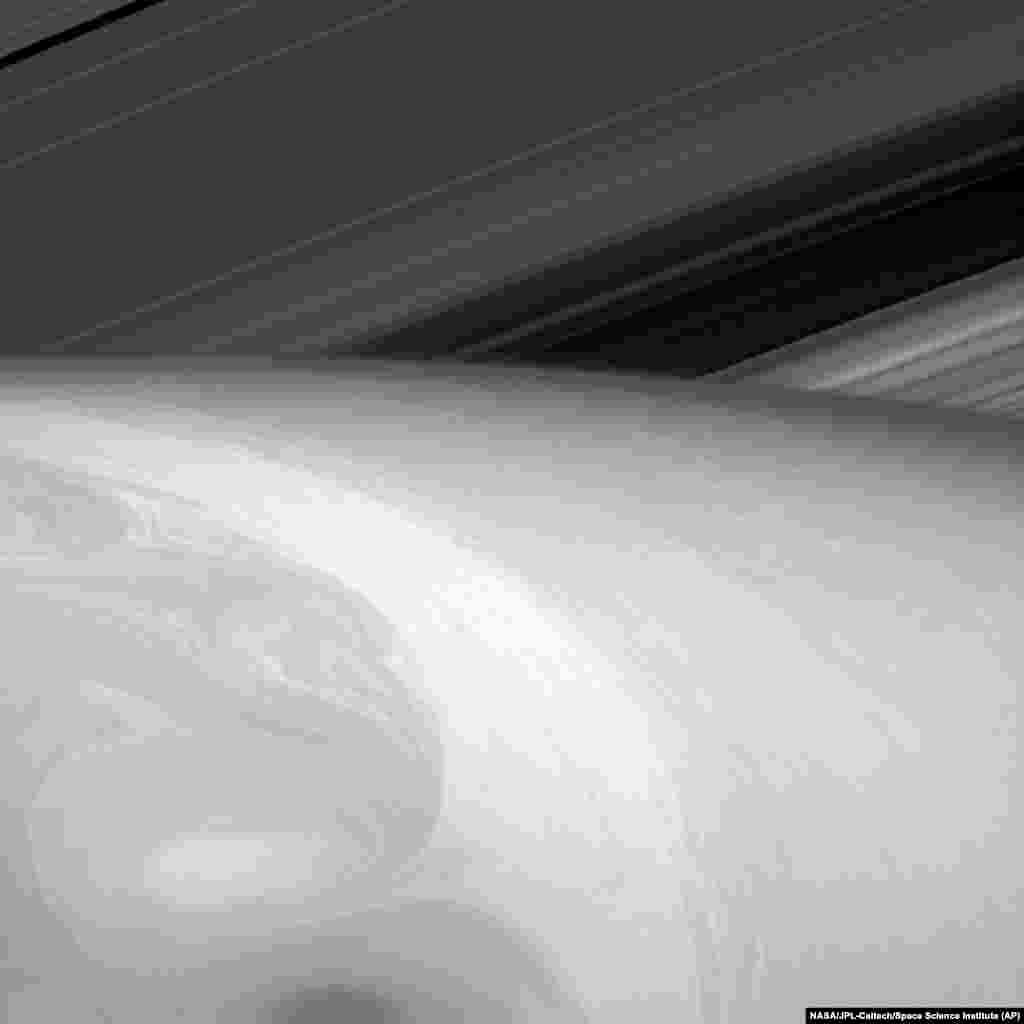
This Aug. 23, 2014 image made available by NASA shows the fluid dynamics in Saturn's uppermost cloud layers.
7/15 This Aug. 23, 2014 image made available by NASA shows the fluid dynamics in Saturn's uppermost cloud layers.
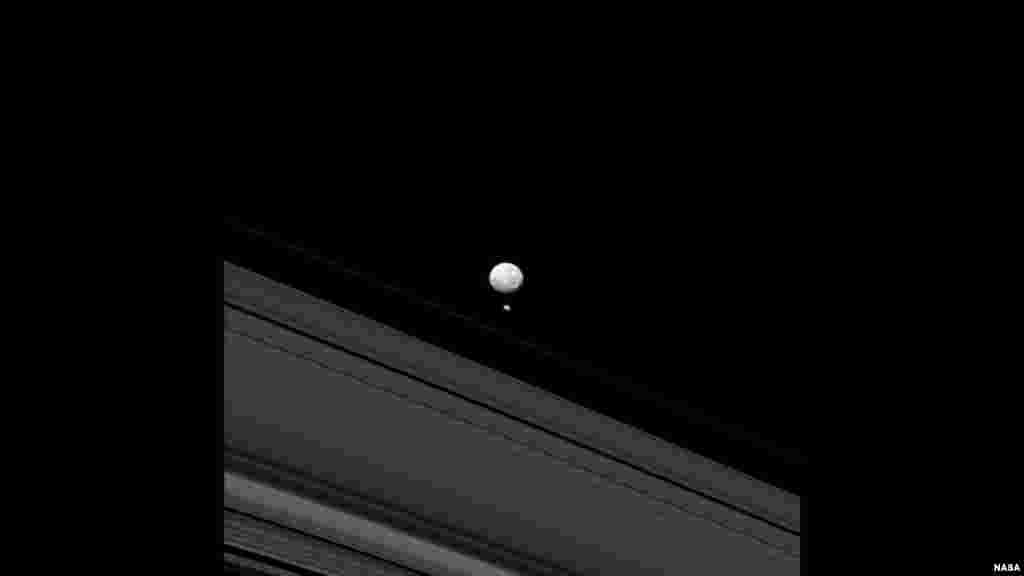
The Saturn moons Mimas and Pandora appear together in this image taken by NASA's Cassini spacecraft. Pandora's small size means that it lacks sufficient gravity to pull itself into a round shape like its larger sibling, Mimas. (NASA/JPL-Caltech/Space Science Institute)
8/15 The Saturn moons Mimas and Pandora appear together in this image taken by NASA's Cassini spacecraft. Pandora's small size means that it lacks sufficient gravity to pull itself into a round shape like its larger sibling, Mimas. (NASA/JPL-Caltech/Space Science Institute)
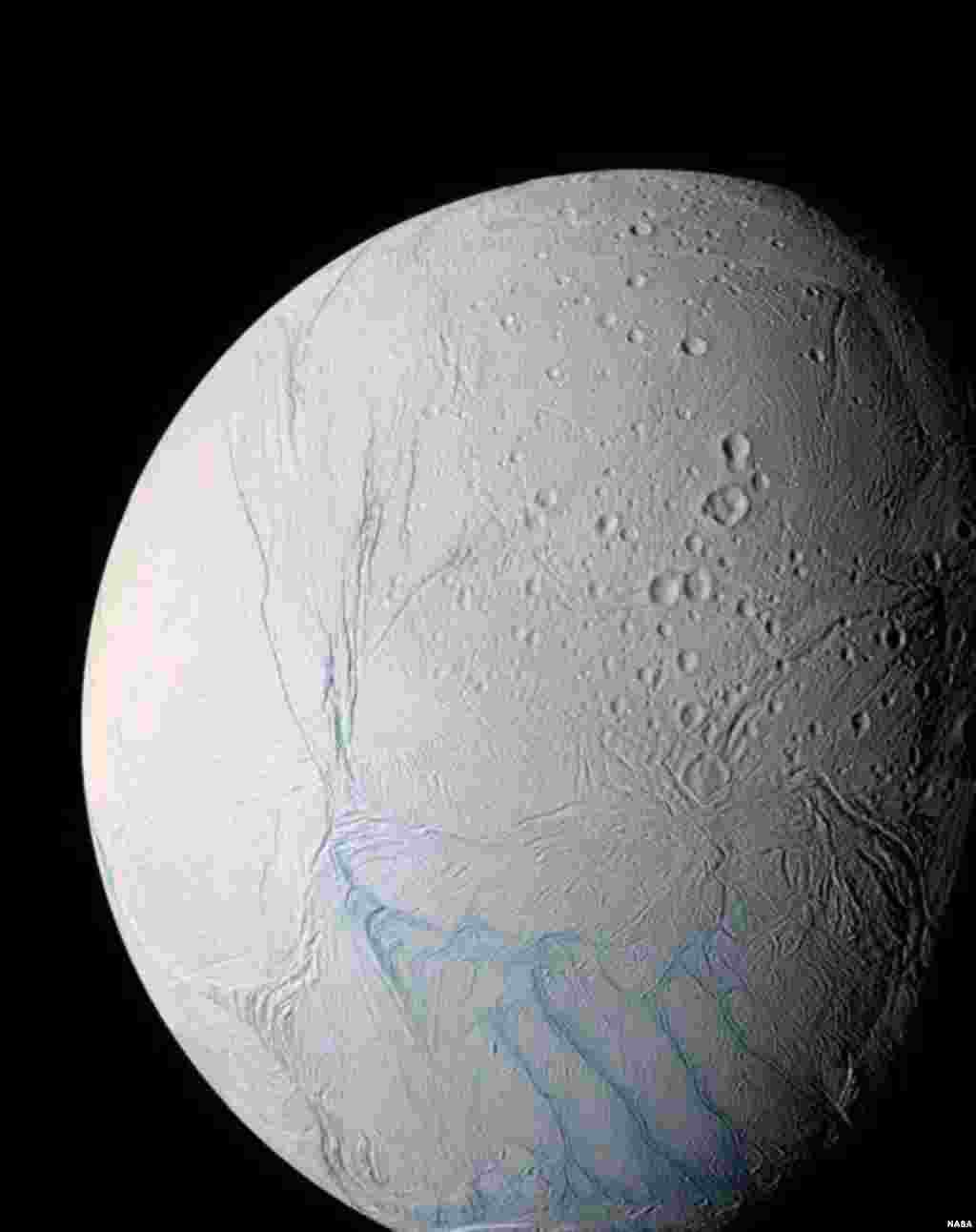
Enceladus, one of moons of Saturn, as seen by NASA's Cassini spacecraft. (NASA)
9/15 Enceladus, one of moons of Saturn, as seen by NASA's Cassini spacecraft. (NASA)
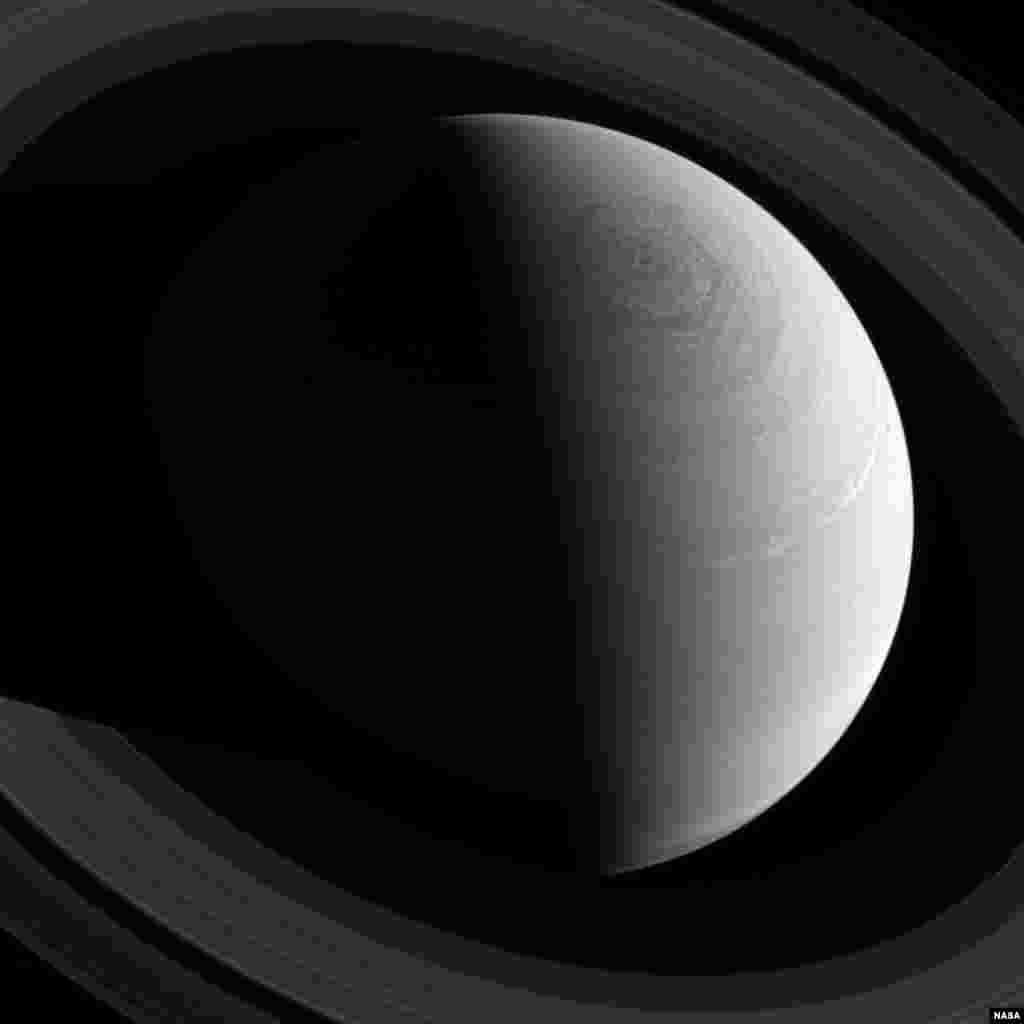
This image of Saturn taken with the Cassini spacecraft wide-angle camera on Nov. 23, 2013 and released on Feb. 3, 2014 was taken using a spectral filter that preferentially admits wavelengths of near-infrared light centered at 752 nanometers. (NASA/JPL-Cal Tech)
10/15 This image of Saturn taken with the Cassini spacecraft wide-angle camera on Nov. 23, 2013 and released on Feb. 3, 2014 was taken using a spectral filter that preferentially admits wavelengths of near-infrared light centered at 752 nanometers. (NASA/JPL-Cal Tech)
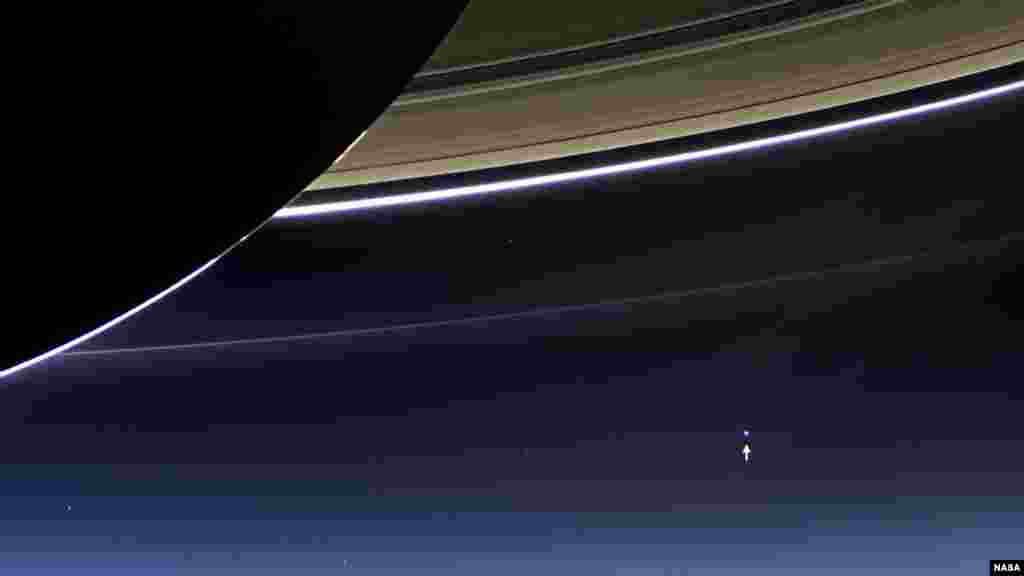
In this rare image taken on July 19, 2013, the wide-angle camera on NASA&#39;s Cassini spacecraft has captured Saturn&#39;s rings and our planet Earth and its moon in the same frame. (Credit: NASA/JPL-Caltech/Space Science Institute)<br />
<br />
&nbsp;
11/15 In this rare image taken on July 19, 2013, the wide-angle camera on NASA's Cassini spacecraft has captured Saturn's rings and our planet Earth and its moon in the same frame. (Credit: NASA/JPL-Caltech/Space Science Institute)

 
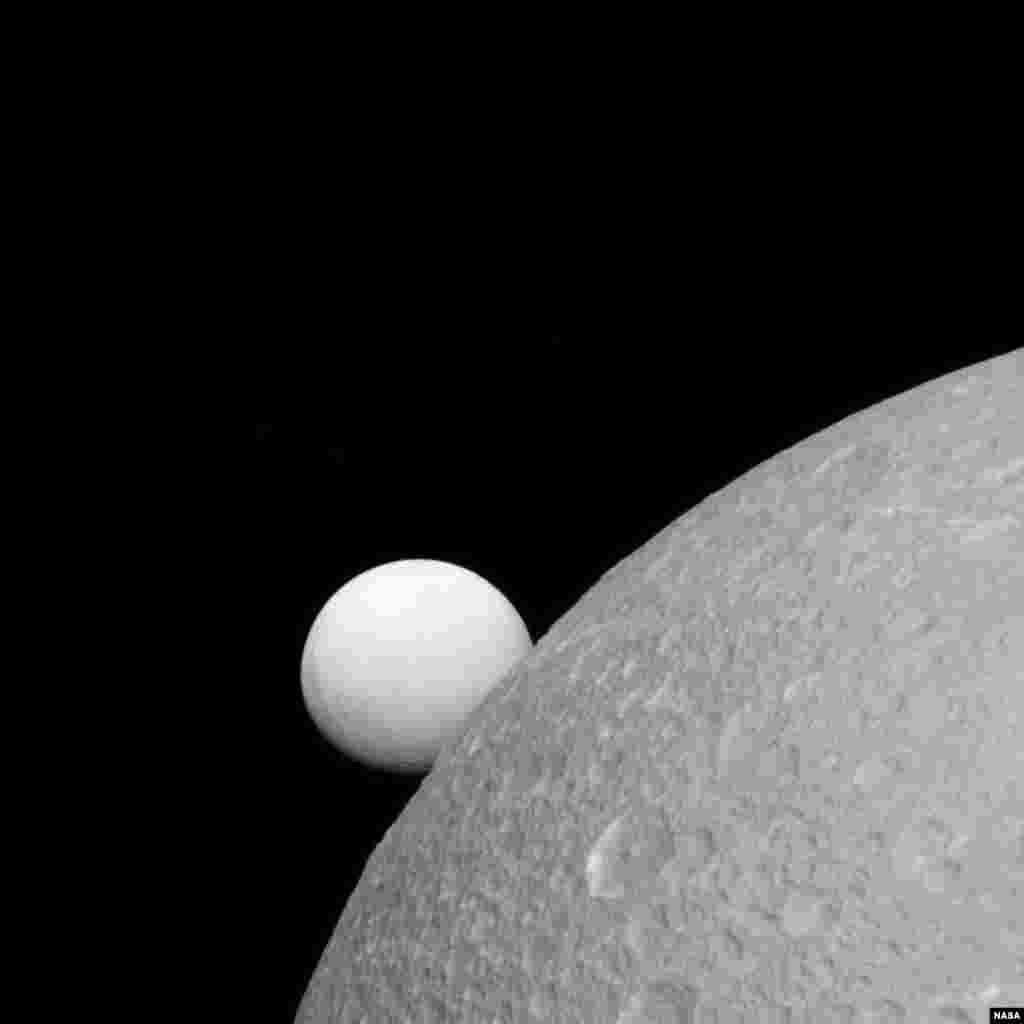
Dione with Enceladus in the background. This image was taken by the Cassini spacecraft, Sept. 8, 2015.
12/15 Dione with Enceladus in the background. This image was taken by the Cassini spacecraft, Sept. 8, 2015.
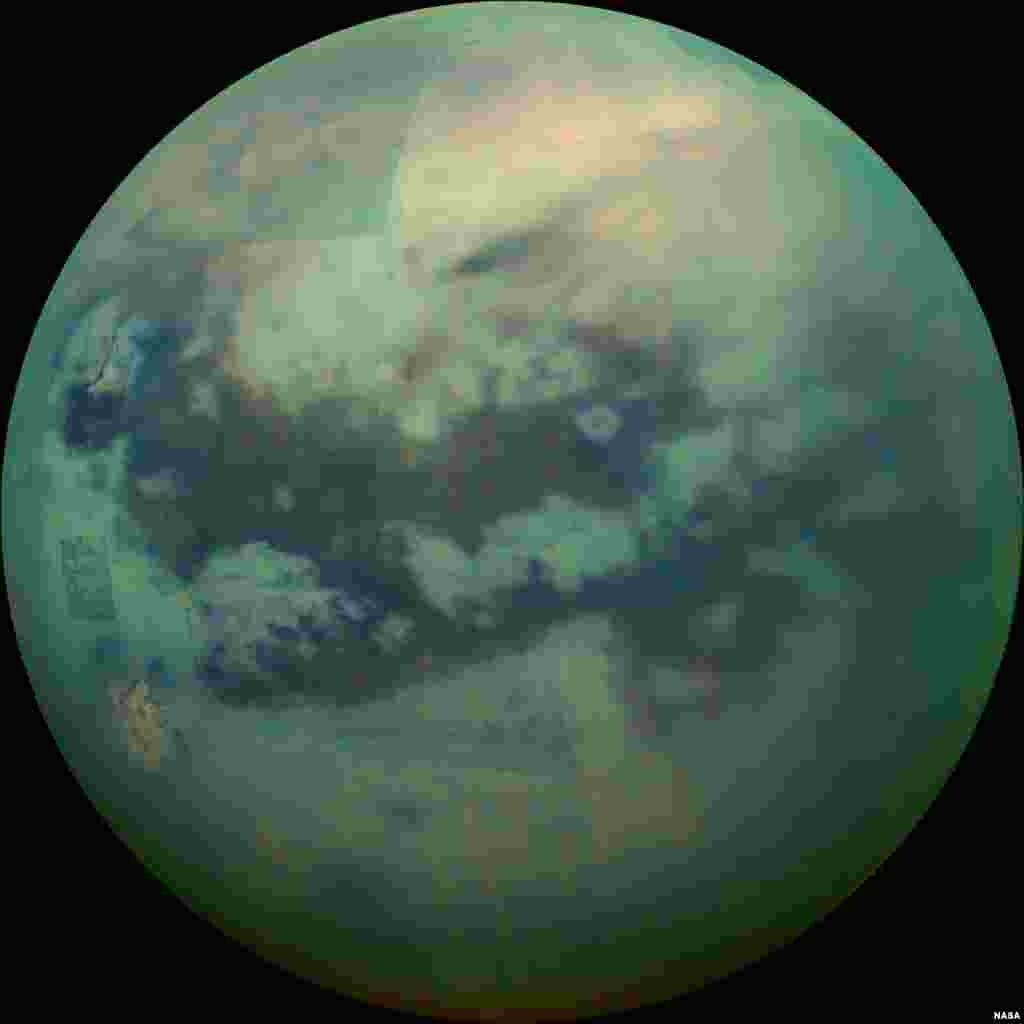
This Nov. 13, 2015 composite image made available by NASA shows an infrared view of Saturn&#39;s moon, Titan, as seen by the Cassini spacecraft. The near-infrared wavelengths in this image allow the cameras to penetrate the haze and reveal the moon&#39;s surface.
13/15 This Nov. 13, 2015 composite image made available by NASA shows an infrared view of Saturn's moon, Titan, as seen by the Cassini spacecraft. The near-infrared wavelengths in this image allow the cameras to penetrate the haze and reveal the moon's surface.
This Feb. 17, 2005 image made available by NASA shows plumes of water ice and vapor from the south polar region of Saturn&#39;s moon Enceladus. The activity is understood to originate from the moon&#39;s subsurface ocean of salty liquid water, which is venting into space.
14/15 This Feb. 17, 2005 image made available by NASA shows plumes of water ice and vapor from the south polar region of Saturn's moon Enceladus. The activity is understood to originate from the moon's subsurface ocean of salty liquid water, which is venting into space.
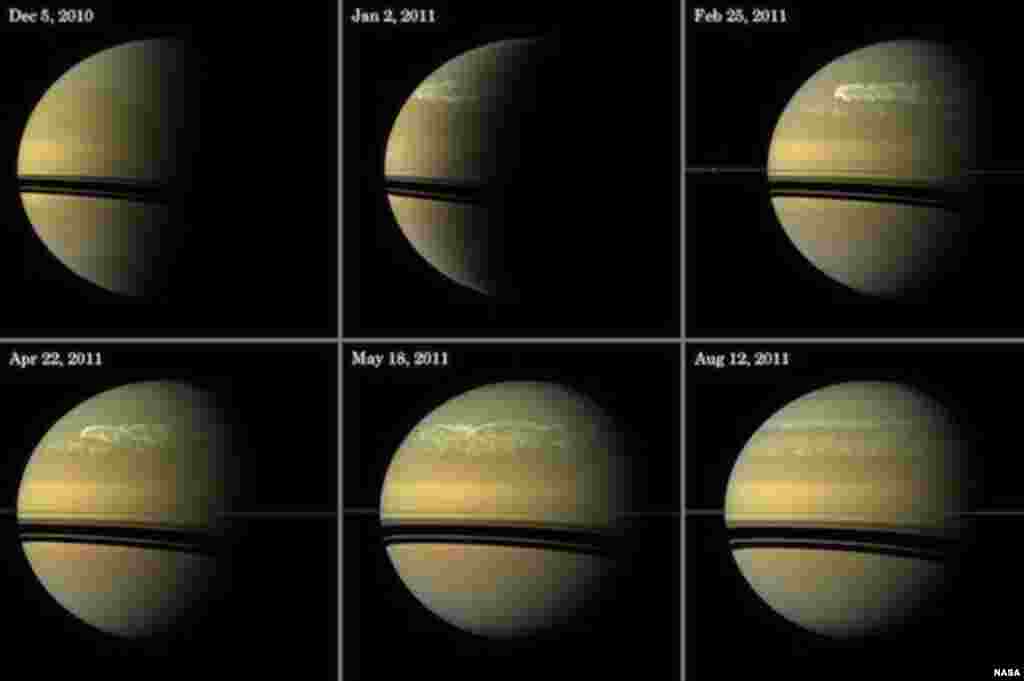
This series of images from NASA&rsquo;s Cassini spacecraft shows the development of the largest storm seen on the planet since 1990. These true-color and composite near-true-color views chronicle the storm from its start in late 2010 through mid-2011, showing how the distinct head of the storm quickly grew large but eventually became engulfed by the storm&rsquo;s tail.
15/15 This series of images from NASA’s Cassini spacecraft shows the development of the largest storm seen on the planet since 1990. These true-color and composite near-true-color views chronicle the storm from its start in late 2010 through mid-2011, showing how the distinct head of the storm quickly grew large but eventually became engulfed by the storm’s tail.

Previous slide
Next slide

ອ່ານຂ່າວນີ້ຕື່ມ ເປັນພາສາອັງກິດ

This item is part of
XS
SM
MD
LG